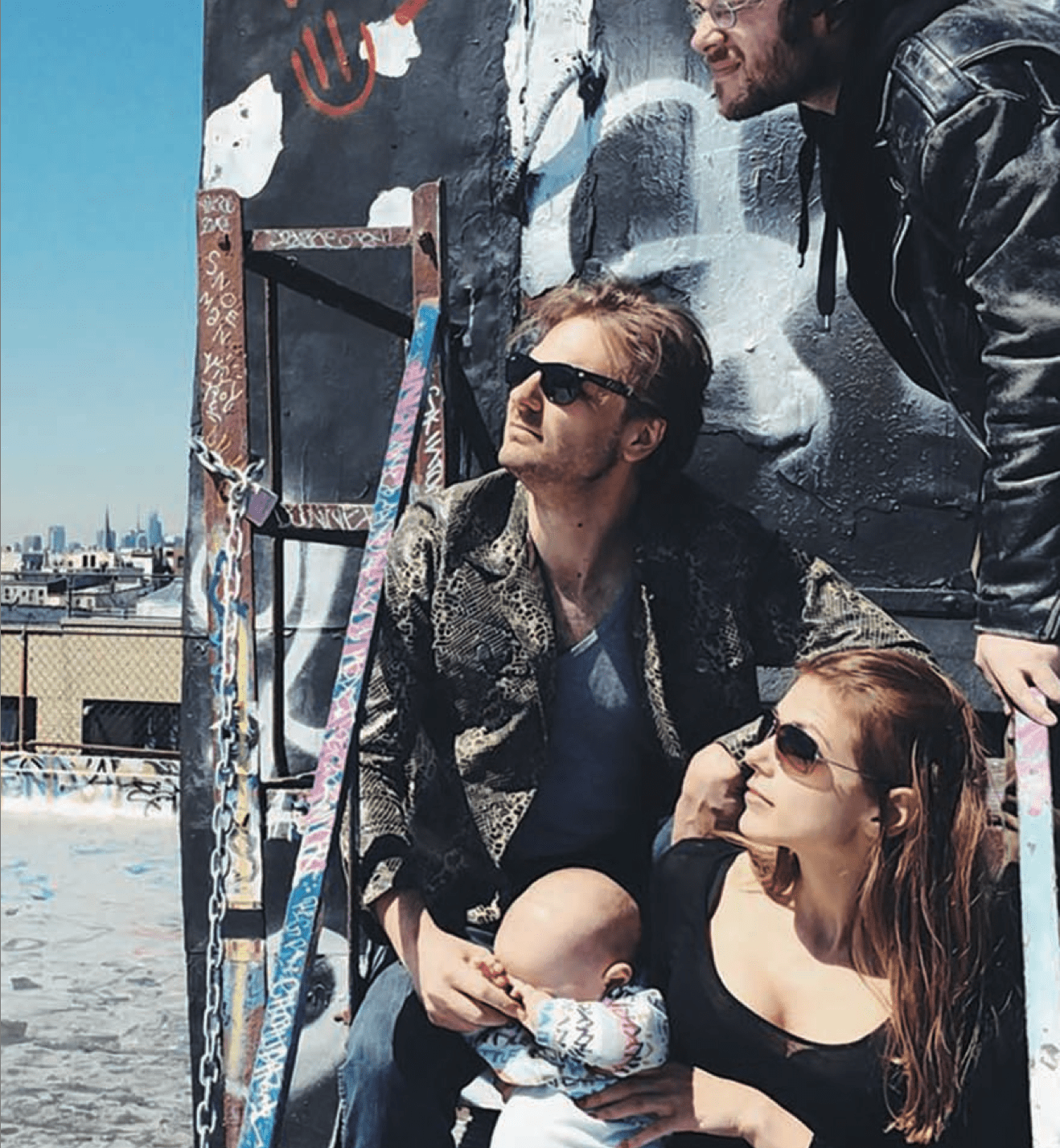
An interview with Linus de Paoli (director) and Anna de Paoli (producer and Head of Production Studies at DFFB) by Tanja C. Krainhöfer
– – – – –
With their collective “Schattenkante” they bring daring cinema from Germany into the world. If need be, even without support and station help: Their new film A YOUNG MAN WITH HIGH POTENTIAL is currently shown in cinemas. Anna and Linus de Paoli have produced this feature film past the usual structures. An interview about genre film and independent filmmaking in Germany in general.
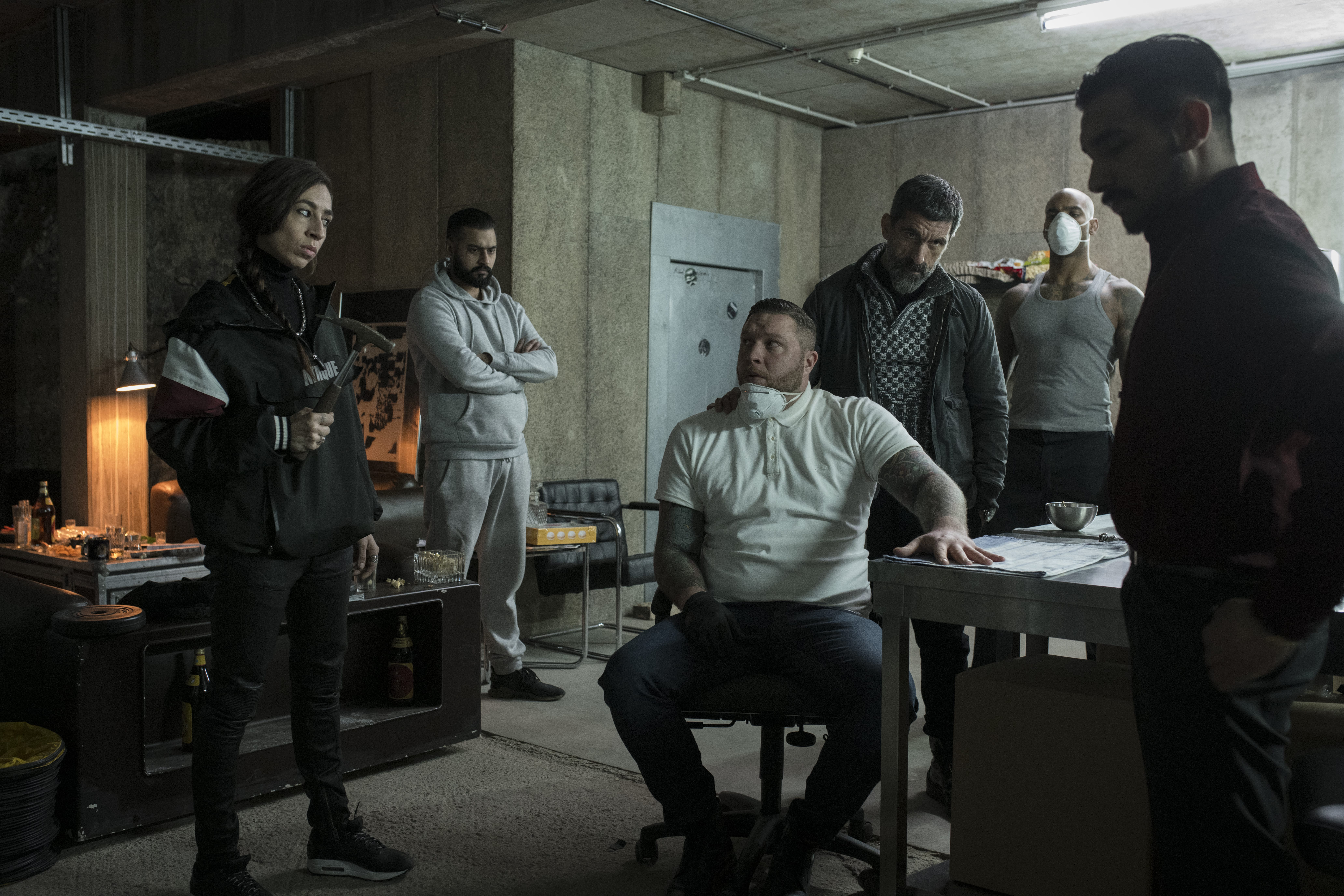
Though essentially a drama A YOUNG MAN WITH HIGH POTENTIAL is not shy when it comes to borrowing Thriller- and Gore-Elements. The film opened last week in German theaters with four copies and a tour through several cities. How did the audience react to the story about the brilliant but timid protagonist Piet and his problematic relationships with women?
Linus de Paoli (LdP): I was positively surprised by how well the film was received by the audience. There are always some walkouts at every screening, which I understand. Our story is hard to swallow at times. Our best experience was when some people who walked out came back in later to see the ending and talk about the film anyway. That is what intrigues me most about filmmaking: the discourse.
The funding boards and TV networks, on the other hand, were not enthusiastic about the project, so you put it together as an entirely independent production. How do you explain that attitude, since Netflix and other streaming portals are chalking up considerable success, often with dark and edgy formats – especially with younger audiences who don’t often go to the movies?
LdP: Unfortunately, the networks and funding institutes are not as open-minded and courageous as they like to think. Their systems are inflexible and their understanding of what is considered “culturally worthy” is limited. Our last film DER SAMURAI was rejected by the network because it didn’t match the “public taste-guidelines”. A YOUNG MAN WITH HIGH POTENTIAL was labeled “morally questionable” by the BKM. It’s sad in this country that the act of showing something is often mistaken with promoting something. For me, it starts to get interesting when things get ambivalent. Netflix and other portals are not necessarily wiser – but certainly more open.
Independent production not only represents the freedom to tell stories beyond the mainstream but also constitutes a serious financial risk. In addition to deferments, sponsoring, payments in kind and countless favors, you still had to come up with a cash budget of 160, 000 EUR. How did you go about it and what obligations came with it?
Anna de Paoli (AdP): After trying out all possible financing alternatives, we concluded: Every euro spent comes with certain conditions, no matter where it comes from. Our co-production with Hahn Film AG had three major advantages: all funding came from the same source. It was immediately available when needed. And it guaranteed complete artistic freedom. Our competence was in delivering high production value on a shoestring-budget against cash flow. A win-win situation. But it’s still true that both sides take full risk. And without the dedication and the willingness of our team, which was only paid minimum wage, the film would never have been made.
Freddy/Eddy producer and director Tini Tüllmann invested 75,000 in her independent film and could only recoup 50% from theatrical release, DVD and VoD – although it had international distribution. How great are the chances that A YOUNG MAN WITH HIGH POTENTIAL will break even, or even make a profit?
AdP: Right now, we are still in the exploitation phase. Our world sales company Raven Banner provided a best-case, mid-case and worst-case scenario. But even the latter promised break-even. We are cautiously optimistic. The press can be very helpful in providing wider public awareness of what we stand for. Though we are totally overwhelmed by the audience reaction on our German cinema tour, we are not expecting it to generate much profit and are hoping for a lucrative BluRay/DVD/VoD start. Our German distributor Forgotten Film is known for it’s tasteful “fetish-editions” with lots of extras. Nor do we share the opinion that physical media is dying out. The increasingly-fragmented online market forces the consumer into subscribing to multiple streaming services and a never-ending scavenger hunt. The best way to guarantee the permanent availability of your favorite film is still to buy a disc – and probably the cheapest too.
Many contemporary Indie-directors and producers of films like “KLAPPE COWBOY!”, “FREDDY/EDDY” and “ÜBERALL WO WIR SIND” were unable to find a distributor and ended up self-distributing their works. You were able to convince Salzgeber and Forgotten Film to distribute your films – as well as Raven Banner for world sales. How did this come about?
AdP: I tricked Raven Banner a little in Cannes last year. They liked the film right away, but were afraid that it might scare buyers off. So, I turned the tables on them and told them to “go where the fear is”. As a company specializing in horror and suspense, they couldn’t argue with that – and it was a convincing argument for selling the film to the USA, Canada and Great Britain, where its topics are especially controversial right now. Forgotten Film shares our passion for certain films and festivals like the “Terza Visione”. That created trust right from the start. It’s a special honor in itself when cinephiles decide to invest in your project. By the way, our first feature film “DR. KETEL” was released with the support of the “Moviemento” cinema in Berlin. They ran the film for months and helped promote it nationwide, making it easier for us to organize a German cinema tour ourselves. It was then that we discovered the incredible value of having contact to passionate cinema curators / operators. They know their audience really well. We wouldn’t want to have missed the experience of this theatrical, partial-self-distribution.
Your story takes place at a pan-European elite campus, where different nationalities come together and communicate in English. So, you could cast actors from several countries. What role did marketing strategies play in that decision?
LdP: None. But the language gave us an advantage in selling the film to English speaking territories. The decision is purely content-related. In our present world, English has become a universal language – especially online. So, I wanted to take the idea one step further: The European Union has merged into one giant country. All that remains of the former nationalities is different accents. I have an ambivalent point of view towards that, too. On one hand, a fantastic utopia, to which we’ve never been closer historically. One the other, whatever great advantages and possibilities this opening has, it won’t protect individuals from isolation. And even this world seems to have pretty tough external borders.
After its world premiere at the Munich International Film Festival last summer, the film had an extensive, international festival run. Did you follow a festival strategy that was also part of a recoupment concept? For example. through screening fees or prize money?
AdP: With festivals we follow a strategy, yes. But it’s a calculation with several unknowns. The fact that we won a German Cinema New Talent Award in Munich created great energy and prevented the film from being labeled as “dirty”. Hopefully, our ultra-sensitive institutions will begin to understand, that a film may raise moral questions and challenge public discourse. But back to your question. Yes, screening fees can contribute towards recoupment of distributor’s and sales agent’s investment – and in the long run even pay off for us, because we negotiated a corridor for the producers. We are well-connected to the fantasy film festival circuit. A rather friendly and passionate part of the scene and market, with close ties and better chances of making fair deals on an equal footing – at least from our experience. Hopefully, the rest of the industry will soon realize that exploiting creatives has got to stop.
At the last edition of Munchner Medientag, Simon Amberger and Kobinian Dufter of Neuesuper described the big players, Amazon, Netflix & co. as an unbelievable chance. Although more than 90 percent of all productions are still initiated without VOD-platforms, their enormous influence on esthetics and storytelling is evident. And they offer the young generation of filmmakers a chance to participate in shaping the cinematic world. Do you share that perception?
LdP: Yes and no. I see streaming services just as ambivalent as television. They are primarily just another form for presenting audiovisual products. For serial formats, it seems to be ideal, because consumers can get exactly what they want, when they want and as much of it as they want. This offers incredible chances, because the demand is high. And platforms like Netflix can also become enablers for daring feature films. Roma is an interesting example. But they can never replace, and should never be mistaken for, the experience of going to a real cinema. Time will tell how their influence on esthetics and storytelling will change in the long run.
AdP: Not all that glitters is gold – also for a producer. Streaming services have high expectations of production value for often comparatively low budgets with immense controlling expenses. Creatives are exclusively bound to projects for long periods of time and have to work very hard on their own projects – or as guns for hire. New chances for artistic freedom can only arise, when we stop chasing after gold all the time. We also have to strengthen independent, sustainable production structures.
In the past, a lot of independent films were able to profit from the new players through Amazon’s Festival Stars program and Netflix’ interest in Berlin-based films. Do you think this will create promising options in the long run – also considering the growing hunger for content of such other platforms as Magneta or Maxdome?
LdP: I can only speculate. I guess competition among the big players will increase and ultimately start a content war. Special-interest content and niche films might become a crucial factor when it comes to consumers deciding which subscriptions, they are willing to pay for. But maybe not. I could also imagine that self-publishing/distribution will become more popular and offer a lucrative way around the typical exploitation chains. Especially among independent filmmakers, I can sense growing frustration with the non-transparent and wasteful way distributors and sales companies often operate. Many believe that they could do a better job in promoting and distributing their films than the established companies, which also seem to lag behind the Zeitgeist.
In addition to film school graduation projects, there seem to be ever more independent films being made in Germany. Do you think that there is a German indie-scene emerging that is establishing itself separately from the existing film industry?
LdP: Even with all the problems and complaints we have, it is still a lot easier and cheaper to get a film project going than in the days of celluloid. And that is a great thing. Nonetheless, independent film production is self-exploitation and very risky. You can do it for a few projects, but you need a lot of endurance and at some point, money to establish yourself. Private investors or streaming services could be helpful for projects with appeal beyond the German market. But right now, the German indie-film is neither striking nor compelling enough. I’m doing my best!
The wish for more film culture and diversity is also one of the key demands of several movements like the “Frankfurt Positions Towards the Future of German Cinema”, or the recently founded “Main Association Cinephilia”. In your opinion, what measures would be necessary to reach that goal?
AdP: It is most important that the wish for change overcomes the fear of change. Fort two years, we have participated and witnessed passionate discussions, where everybody in the room was on the same page until a “higher authority” intervened – be it one’s own association, a network’s commission of editors, or other anxious colleagues. Worried about their professional existence, many filmmakers retreated from their positions. But sticking our heads in the sand is no option. Die “Frankfurt Positions” give specific ideas about possible measures. ” With this, everything is said! “ was Jeanine Meerapfel’s (president of the Academy of Arts) summery at the panel “Cultural Film Funding Now!” on 5th February, 2019. One year after the “Frankfurt Positions” were published, it is a major goal to plan definitive steps. We’re working on it at this year‘s edition of Lichter Filmfest, but also on the first conference of the “Main Association Cinephilia” alongside “Pro Quota Film”, many festival programmers and other allies. We should know more after Easter.
Indie-productions often have a hard time when it comes to exploitation. What possible options do you see to support smaller productions?
AdP: That’s a big field. The separation of production funding from distribution funding is another demand in the “Frankfurt Positions”. The complexity of the administration involved in handling funding also needs to be revisited and simplified. Otherwise indie-productions are not able to handle it. Another problem: The traditional exploitation windows require cost-intensive marketing. Judging from the behavior of our own consumers, we believe that films would profit from immediate availability in all possible forms. Here, we agree with Netflix. Word-of-mouth recommendation could create a bigger buzz – and even draw people into the cinemas. There is a lot of potential in synergy effects that has not so far been used so far and that could possibly inspire and boost cinema attendance. What else? Festivals that take action and present smaller films in their own DVD/VOD editions. Presenting a film at a market should be easier and cheaper. We constantly maintain a worldwide network of filmmakers and conduct continuous exchange on our experiences. Meanwhile, we’ve gathered some expertise on distribution and can help each other out. Together we are strong.
You are couple and soon expecting your third child. Could you tell me your secret on how to feed a kid from deferrals?
LdP: Well, you don’t. We both have other jobs that pay the rent and give us some security, so that every other year we can “afford” to realize a project. Anna works for the German film- and television Academy (DFFB) as head of production studies. I’m a freelance composer and part of the selection committee of the Perspective German Cinema section at the Berlinale. Our friends in the indie-scene call us “boutique” filmmakers. I consider that a compliment. If we put the camera on the tripod, it’s only out of an urge to create something special. To quote Anna: There is enough audiovisual crap in the world. We don’t need to contribute to the pile.
Do you consider yourself a director-producer-duo?
AdP: Absolutely. We met at film school (also DFFB) where Linus studied directing and I studied production. We’ve been working together since 2005 as the collective Schattenkante, which then became our production company. A YOUNG MAN WITH HIGH POTENTIAL is our third feature and Linus’ second feature-length work as a director.
What’s next for you? Are you already planning a new project?
LdP: As I mentioned earlier, our next child is due in May. That’s a project alright. But I am also developing two projects on the side. One of the is a horror-film with the working title Kruste(Crust). The other, a loser-ballade in the form of a comedy, called Florow.
AdP: We’ve invested the prize money from Munich for an initiative called “Film macht Schule” (literally: film makes school). Filmmakers, predominantly female, meet with students in workshops and are free to create concepts. It’s all about encounters to help light a spark of cinephilia to ignite something in the new generation.